

A commercial renovation in Chicago is more than a physical upgrade; it’s a high-stakes investment where the cost of a single regulatory misstep can be staggering. With local construction costs rising 6.77% over the last twelve months, the difference between a seamless launch and a stalled project often comes down to the expertise of your chicago commercial contractors. You’ve likely spent nights worrying about how the city’s recent Phase 3 code updates might impact your timeline or whether your budget can withstand the $600 permit deposit fees and evolving energy standards. It’s a valid concern because the complexity of the Chicago building department can feel like a moving target.
We understand that your primary goal is a sophisticated, functional space that doesn’t compromise your daily operations. This guide is designed to replace that anxiety with a clear, professional roadmap. You’ll gain the confidence to navigate the 2026 Chicago Energy Transformation Code and master the nuances of the International Building Code transition. We’ll detail exactly how to select a general contractor who prioritizes business continuity and precision; ensuring your vision is realized without the typical friction of urban construction.
Key Takeaways
- Identify the general contractor’s role as the central point of accountability for managing multi-phase projects and ensuring site safety.
- Distinguish the specialized material grades and logistical precision required for commercial renovations compared to residential work.
- Navigate the intricate roadmap of Chicago building permits and pre-construction planning alongside experienced chicago commercial contractors.
- Prepare for the logistical nuances of urban construction, such as managing high-rise loading docks or securing necessary street closures.
- Secure your investment by following a rigorous vetting process that prioritizes verified licensure and a proven history of high-end commercial excellence.
Understanding the Role of a General Contractor for Commercial Projects
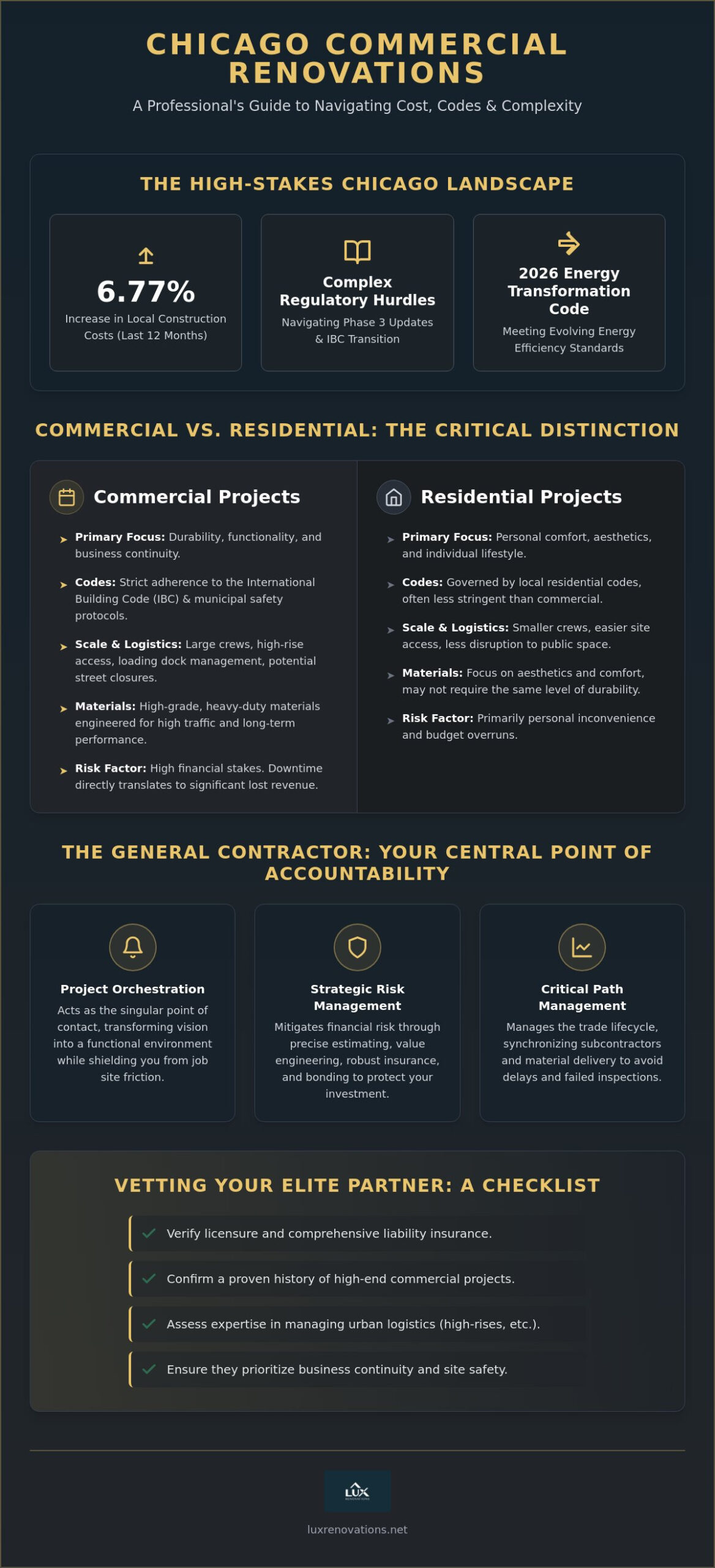
A commercial general contractor acts as the singular point of accountability for your entire renovation. They’re the orchestrators of the construction process; transforming a vision into a functional business environment while shielding you from the daily friction of the job site. While residential work often focuses on personal aesthetics, commercial projects demand a higher tier of durability and strict adherence to complex municipal safety protocols. This distinction is critical. The Role of a General Contractor in a business setting involves managing high-stakes logistics where a single day of downtime can translate into significant lost revenue.
Leading chicago commercial contractors provide more than just labor. They deliver sophisticated project management that ensures your business continuity remains the priority. In the current market, where nonresidential construction costs in Chicago rose by 6.77% over the past twelve months, having a professional at the helm is essential. They maintain your 2026 project timeline by anticipating supply chain shifts and coordinating the specific demands of urban construction.
Strategic Oversight and Risk Management
Managing the complex web of vendors requires a disciplined hand. From architects and engineers to specialized trades, your contractor ensures every contributor moves in unison. They mitigate financial risk through precise estimating and value engineering, which prevents the budget creep that often plagues less organized projects. Protecting your investment also involves robust insurance and bonding. A professional GC carries the necessary liability coverage to ensure that any unforeseen site issues don’t become your financial burden. They act as a visionary partner; seeing the potential pitfalls before they manifest into costly delays.
The Trade Lifecycle: From Demolition to Final Inspection
The journey from a shell to a high-end workspace follows a methodical, logical flow. It begins with controlled demolition and moves quickly into the intricate coordination of specialized commercial trades. These include:
- Mechanical, Electrical, and Plumbing (MEP): Coordinating these systems to meet high-performance standards for modern office or retail environments.
- Subcontractor Synchronization: Ensuring that crews don’t overlap in ways that compromise safety or quality.
- Critical Path Management: Monitoring the sequence of events to ensure long-lead materials arrive exactly when the trades are ready to install them.
Every phase must meet the rigorous standards of the latest Chicago building codes. By managing this critical path with precision, your contractor avoids the friction of failed inspections or re-work. This steady, professional approach ensures that the final result is not just a renovated space, but a high-performance asset that supports your long-term business goals.
Commercial vs. Residential Contracting: Why the Distinction Matters
Choosing a partner for your business space requires a different lens than selecting a home remodeler. While residential projects focus on personal comfort and private aesthetics, commercial work demands extreme durability and strict adherence to the International Building Code (IBC). Elite chicago commercial contractors understand that a business environment is a high-traffic ecosystem. It’s not just about visual appeal; it’s about engineering a space that can withstand the rigors of daily operations while maintaining a premium, professional atmosphere. For those seeking a sophisticated chicago remodeling experience, the distinction lies in the contractor’s ability to manage large-scale logistics without disrupting the surrounding urban flow.
The scale of logistics in the commercial sector is inherently more complex. Managing large crews within active business districts or occupied office buildings requires a level of precision that residential contractors rarely encounter. Every movement must be choreographed to ensure safety and minimize noise. This methodical approach is what separates a standard renovation from a high-end transformation. It ensures your project moves forward with professional predictability.
Regulatory and Code Complexity in the Chicago Market
The regulatory landscape in Chicago is currently undergoing a significant shift. Phase 3 of the Construction Codes Modernization Initiative, introduced on April 15, 2026, has updated standards for mechanical systems, fire prevention, and energy efficiency. Navigating these changes requires an Elite Partner for Your Commercial Transformation who stays current with municipal requirements. Commercial builds must integrate ADA-compliant accessibility, advanced fire suppression systems, and life safety protocols that residential codes simply don’t address. Chicago-specific licensing is a non-negotiable requirement. It ensures your contractor possesses the technical mastery to handle these high-stakes urban regulations.
Material Standards and Long-Term Durability
In a professional environment, finishes must be resilient. We shift from residential-grade materials to commercial-grade solutions that offer longevity in high-traffic zones. Acoustic management is another pillar of the commercial sector. Strategic soundproofing and acoustic ceiling treatments are vital for maintaining privacy and focus in modern office layouts. By 2026, sustainable building practices have also moved to the forefront. Implementing the 2026 Chicago Energy Transformation Code not only reduces your carbon footprint but also optimizes long-term operational costs through improved efficiency. If you’re ready to elevate your corporate footprint, our team at Lux Renovations LLC specializes in commercial renovations that balance luxury with practical performance.
The Anatomy of a Commercial Renovation: From Vision to Completion
A successful commercial renovation isn’t a series of isolated tasks; it’s a disciplined evolution from a conceptual vision to a high-performance workspace. This journey requires a methodical approach that balances architectural intent with the rigid realities of urban logistics. Professional chicago commercial contractors manage this lifecycle with a steady hand, ensuring that each phase builds upon the last with professional predictability. By following a structured four-phase process, you can transform your business environment while maintaining the peace of mind that comes from expert project management.
Pre-Construction and Value Engineering
The most critical work happens before a single hammer swings. Early collaboration between your general contractor and architect allows for value engineering; a process that optimizes your design to meet financial goals without sacrificing aesthetic quality. In Chicago’s historic landscape, this phase is vital for identifying unforeseen conditions. Older buildings often hide structural or mechanical surprises that can derail a budget if not caught early. We create a realistic 2026 budget that accounts for the 6.77% rise in nonresidential construction costs, ensuring your financial planning remains grounded in current market data.
Once the design is finalized, the focus shifts to the Chicago Department of Buildings. As of January 6, 2026, the initial non-refundable deposit for plan-based building permits is $600.00. Precision is essential here. Submitting an incomplete application can trigger a $600 penalty, making the expertise of seasoned chicago commercial contractors invaluable for navigating these administrative hurdles. During this time, we also secure long-lead materials to ensure that supply chain delays don’t compromise your move-in date.
Phased Execution and Minimizing Business Disruption
For many businesses, closing doors during a renovation isn’t an option. We specialize in phased execution, a strategy that allows your daily operations to continue while we work in designated zones. This requires meticulous coordination of night and weekend shifts to handle the most disruptive tasks when your staff and clients aren’t present. Our team prioritizes site safety and cleanliness, maintaining a professional demeanor that reflects your brand’s standards even during active construction. We establish clear communication protocols to keep all stakeholders informed, ensuring the transformation feels like a controlled, positive progression rather than a chaotic interruption.
The final phase is the close-out. This includes the creation of detailed punch lists to ensure every finish meets our high-end standards. We manage the final inspections and secure the necessary occupancy permits, providing a seamless transition into your new space. It’s a journey from vision to completion that prioritizes your business’s continuity and the long-term value of your investment.
Navigating Chicago’s Unique Commercial Construction Landscape
Building in the heart of Chicago requires more than just technical skill; it demands a deep understanding of the city’s logistical theater. In high-density areas like the Loop or River North, the vertical constraints of a project are often more challenging than the construction itself. Elite chicago commercial contractors don’t just manage crews. They manage the delicate choreography of service elevator schedules, loading dock windows, and municipal street closures. Success in this environment depends on a contractor’s ability to operate within these rigid windows without disturbing the flow of a bustling urban center.
While the downtown core presents its own set of hurdles, suburban commercial hubs in the North Shore require a different kind of expertise. These projects often involve navigating local zoning boards and ensuring that a modern business space respects the aesthetic character of the community. Whether you’re renovating a high-rise office or a boutique retail space in Skokie or Glencoe, your partner must possess the local roots to handle these distinct geographic demands. This steady, professional approach ensures your project respects both the neighborhood and the timeline.
High-Rise Condo and Urban Office Logistics
In mixed-use buildings where residential units sit above commercial spaces, noise ordinances and work-hour restrictions become primary project drivers. A specialized approach to condo remodeling is essential for protecting common areas and managing debris removal in vertical environments. We prioritize the integrity of the building’s infrastructure, from protecting marble lobby floors to ensuring that HVAC tie-ins don’t disrupt other tenants. This meticulous care reinforces your reputation as a respectful neighbor within the building’s ecosystem while maintaining a clean, professional job site.
Permitting and Compliance Standards
The City of Chicago offers different paths for project approval, ranging from the “Easy Permit” process for minor repairs to full plan reviews for major renovations. Navigating the Department of Buildings (DOB) requires a strategic hand. Experienced chicago commercial contractors can often expedite the inspection process by ensuring every detail aligns with the latest municipal requirements. This familiarity with the city’s bureaucracy prevents the administrative bottlenecks that often lead to costly delays. If you’re planning a project in a high-density environment, contact our team at Lux Renovations LLC to discuss our specialized approach to commercial renovations.
Selecting an Elite Partner for Your Commercial Transformation
Choosing a partner for your commercial transformation is the final, most critical step in securing your investment. It’s a decision that balances your vision with the practical need for a disciplined, technical execution. The right choice distinguishes elite chicago commercial contractors from the rest of the market; ensuring your project is managed with the precision it deserves. You aren’t just hiring a builder. You’re selecting a visionary partner who can see the potential in your space and possesses the technical mastery to realize it without compromising your business operations.
A professional partnership should feel composed and steady. You deserve a contractor who values peace of mind as much as the final physical result. Verify every claim by starting with the City of Chicago’s official portal to confirm active licensure and insurance. A portfolio of high-rise or large-scale commercial work is essential, but it’s the quality of communication that truly defines the partnership. Look for a white-glove approach where every update is methodical and every challenge is met with a calculated, professional solution.
Vetting for Mastery and Reliability
During the interview phase, your questions should gauge more than just pricing. Ask how the contractor has historically managed the specific code shifts we’ve discussed or how they’ve successfully mitigated market fluctuations for recent clients. A master craftsman who also acts as a sophisticated project manager will have concrete, strategic answers. Check references specifically for commercial renovations completed within the last twelve months to ensure the team is current with the latest logistical demands of the modern Chicago market. There is immense value in a partner who understands both the aesthetic demands of luxury environments and the rugged utility required for commercial success. To ensure you’re applying the most rigorous standards during this process, our renovation contractor vetting checklist for luxury and precision provides a definitive framework for evaluating technical expertise and professional accountability. For a deeper dive into what separates top-tier firms from the rest, our 2026 executive reference guide for commercial general contractors in Chicago outlines the regulatory updates and risk-mitigation strategies that define elite performance in today’s market.
The Lux Renovations LLC Approach to Commercial Excellence
At Lux Renovations LLC, we represent the pinnacle of Chicago commercial contracting by blending high-end sophistication with grounded reliability. Our team doesn’t just build; we manage the entire lifecycle of your project from planning to execution. We understand the unique requirements of restaurant renovation and hospitality, where brand identity and kitchen ergonomics must coexist seamlessly. Our commitment to integrity and meticulous attention to detail ensures that your vision is realized through a controlled, high-quality process.
We invite you to transform your commercial vision into a disciplined reality. By choosing a partner that prioritizes professional predictability and aesthetic excellence, you ensure that your new space serves as a high-performance asset for years to come. Let’s build a space that reflects the elite standards of your business.
Realizing Your Vision with Professional Predictability
Transforming a commercial space in a city as complex as Chicago requires more than just a blueprint; it demands a strategic partnership built on technical mastery and disciplined project management. You now understand that navigating the 2026 building code updates and the intricate logistics of urban high-rises is a task for specialists. Selecting from the elite pool of chicago commercial contractors means choosing a team that prioritizes your business continuity as much as the final aesthetic result. By focusing on durability, regulatory compliance, and a phased execution, you protect your investment while creating a high-performance environment that reflects your brand’s excellence.
At Lux Renovations, we bring a white-glove standard to every project, from the vertical challenges of downtown high-rises to sophisticated suburban hubs. We’re licensed and insured experts deeply rooted in Chicago building codes, offering full-service management from Skokie to the North Shore. Our team is ready to guide you through this complex journey with a steady hand and a commitment to your peace of mind. Partner with Lux Renovations for your next commercial project. Your business deserves a space that inspires absolute confidence.
Frequently Asked Questions
What is the difference between a general contractor and a construction manager?
A general contractor acts as the primary builder and single point of accountability for your project, whereas a construction manager typically serves as an advisor to the owner. While a GC manages the trades directly and assumes the risk of the build, a CM often oversees the broader financial aspects without holding the trade contracts. For most commercial renovations, hiring a GC provides a more streamlined path to completion with a fixed-price agreement.
How long does a typical commercial renovation in Chicago take?
The duration of a commercial renovation varies based on scope, but most mid-sized urban projects require between three to six months. This timeline accounts for pre-construction planning, the city’s permitting process, and the physical build. Larger high-rise transformations or projects requiring extensive structural work may extend beyond this range. We prioritize a methodical schedule to ensure your business returns to full capacity as quickly as possible.
Do I need to close my business during a commercial remodel?
You don’t necessarily need to close your doors if your contractor utilizes phased execution and after-hours shifts. Professional chicago commercial contractors specialize in minimizing disruption by partitioning work zones and scheduling heavy construction during nights or weekends. This approach maintains your revenue stream while the transformation progresses. It requires meticulous coordination to ensure the environment remains safe and clean for your staff and clientele during business hours.
How much does a commercial building permit cost in Chicago?
Building permit fees in Chicago are calculated based on the project’s complexity, but there are fixed entry costs to consider. As of January 6, 2026, the initial non-refundable deposit for plan-based building permits is $600.00. Substantially incomplete applications can trigger an additional $600 penalty. Beyond the deposit, the final fee is determined by the Chicago Department of Buildings based on the total valuation and specific trade requirements of your build.
What insurance should my commercial general contractor have?
Your general contractor must carry comprehensive general liability insurance, workers’ compensation, and often an umbrella policy. These coverages protect you from financial responsibility in the event of site accidents or property damage. For high-rise projects, we also recommend verifying that the contractor’s policy limits align with your building management’s specific requirements. This ensures every stakeholder is shielded from risk throughout the construction lifecycle.
Can a residential contractor do commercial work in Chicago?
While some contractors hold dual licenses, residential specialists often lack the technical expertise required for the International Building Code (IBC) and commercial life safety systems. Commercial projects demand higher material grades and more rigorous fire suppression standards than typical home remodels. It’s vital to partner with a team that possesses a proven track record in the commercial sector to avoid failed inspections or non-compliance with the 2026 energy codes.
How do I verify if a Chicago commercial contractor is licensed?
You can verify a contractor’s standing through the City of Chicago’s official web portal for licensed trades. This database provides real-time information on a firm’s license status, active insurance, and any past disciplinary actions. Professional chicago commercial contractors will also provide their license number and proof of insurance upon request during the vetting process. Verifying these credentials is a non-negotiable step in ensuring your project remains legally compliant and protected.
What is value engineering in commercial construction?
Value engineering is a systematic method used to improve the value of a project by examining the function of every component and finish. The goal is to reduce costs without sacrificing the quality, performance, or aesthetic integrity of the design. By collaborating early with a commercial general contractor in Chicago, you can identify more efficient materials or construction methods that align with your budget. It’s a sophisticated way to optimize your investment while maintaining a high-end result. For business owners who also want to understand how permit fees and urban logistics affect residential spaces within their properties, our detailed breakdown of kitchen remodel cost chicago homeowners should anticipate in 2026 provides a useful parallel framework for budgeting and planning.