


A luxury renovation is not merely a construction project; it is a high-stakes performance where the right partner acts as both a meticulous craftsman and a sophisticated project manager. You understand that transforming a Chicago high-rise or a North Shore estate requires more than just an aesthetic vision. It demands a professional who respects the architectural integrity of your home while navigating the labyrinth of city building codes and strict HOA logistics. You likely feel the weight of ensuring that your chosen renovation contractor possesses the technical precision to match your high standards without the risk of costly delays or administrative errors.
We agree that your peace of mind is just as valuable as the final physical result. This article provides you with a definitive checklist to master the selection of a premium renovation contractor, ensuring your investment is protected by deep expertise and absolute professional accountability. We will examine the specific credentials, high-rise experience, and insurance standards necessary to deliver a seamless, white-glove experience from the initial planning to the final walkthrough.
Key Takeaways
- Identify the role of a professional renovation contractor as the central orchestrator who harmonizes design, labor, and complex urban logistics.
- Validate the legal and technical standing of a firm by prioritizing specialized high-rise experience and mastery of Chicago building codes.
- Learn to vet portfolios for genuine craftsmanship and conduct reference calls that uncover the true reality of the client experience.
- Navigate the “Condo Commandments” by understanding how HOA rules and downtown logistics dictate the pace and success of your project.
- Protect your investment by transitioning from high-level estimates to detailed, fixed-price contracts and establishing a consistent communication rhythm.
What is a Professional Renovation Contractor?
A professional renovation contractor acts as the central orchestrator of a home’s transformation. They harmonize the creative vision of the designer with the technical execution of the labor force, ensuring every detail aligns with the original intent. A renovation contractor is a licensed professional who manages every phase of a remodel. This role is distinct from specialized sub-contractors, such as master electricians or custom cabinetry installers, who focus exclusively on their specific trade. Instead, the contractor oversees the entire construction ecosystem, ensuring that every element fits together with architectural precision and structural integrity.
For luxury residential projects, full-service management is indispensable. It removes the logistical burden from the homeowner and places it in the hands of an expert who understands the nuances of high-end finishes. These projects involve complex material procurement, custom fabrications, and precise scheduling that leaves no room for error. Without a unified leader, these moving parts can easily clash, leading to costly delays and compromised aesthetics. A premier contractor provides a steady hand, turning a complex vision into a physical reality through disciplined management and a white-glove approach to service.
General Contractor vs. Handyman: Knowing the Difference
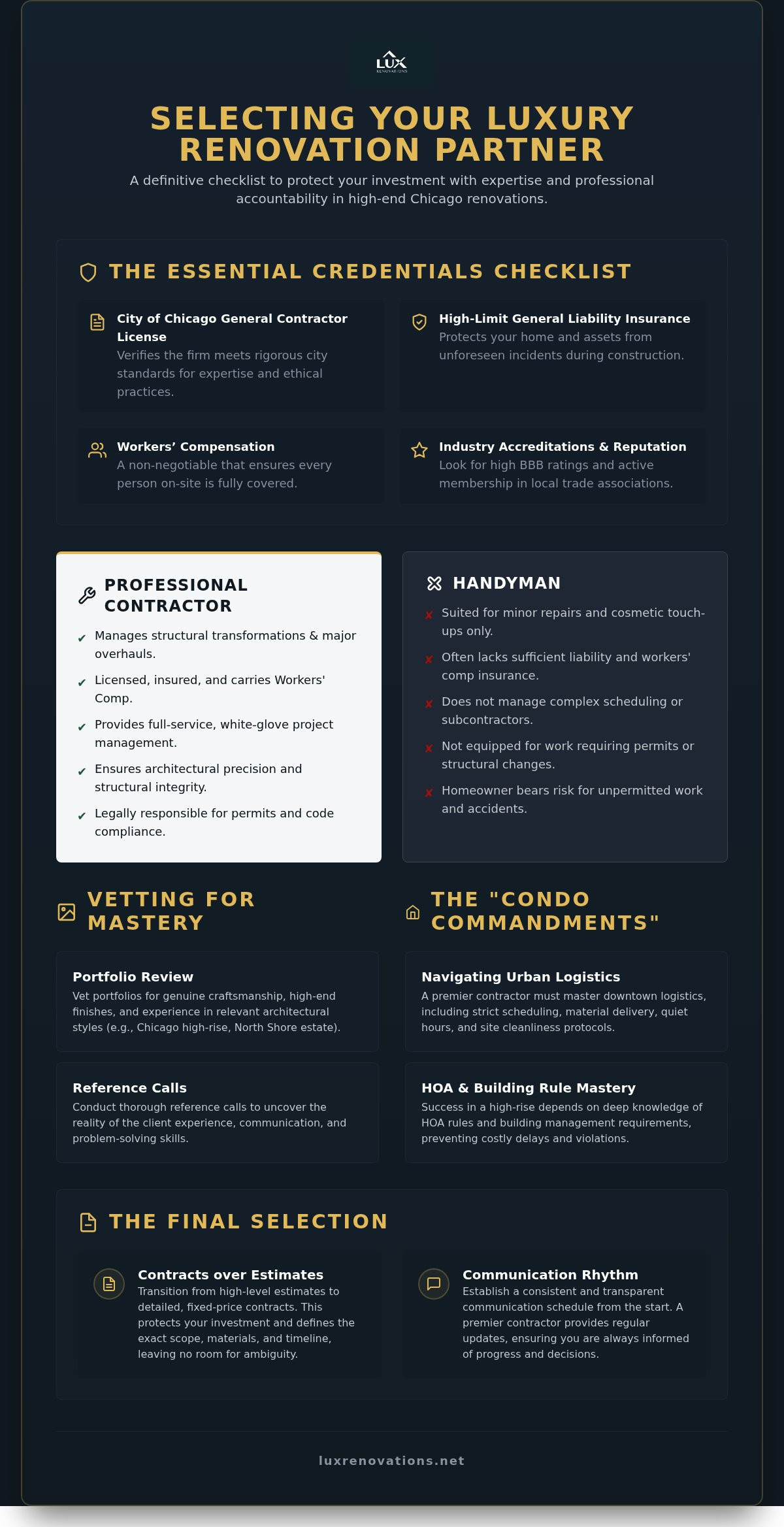
The distinction between a handyman and a general contractor often comes down to the scale and risk of the investment. A handyman is typically suited for minor repairs or cosmetic touch-ups that don’t require permits. In contrast, a renovation contractor manages structural transformations, major system overhauls, and complex additions. This difference extends to legal protection and peace of mind. Licensed contractors carry significant liability insurance and workers’ compensation, which protects your assets if an incident occurs on-site. Choosing a master craftsman means investing in technical discipline. It ensures that the structural integrity of your home is never compromised for the sake of speed or convenience.
The Role of Project Management in High-End Remodeling
Elite project management is the engine behind every successful chicago remodeling project. It involves more than just basic oversight; it is the art of orchestrating schedules to minimize disruption in your daily life. High-end projects often occur in occupied homes or high-rises where quiet hours and site cleanliness are paramount. Quality control serves as a non-negotiable standard of the trade. Every joint, finish, and fixture undergoes rigorous inspection before the project moves to the next phase. This methodical approach ensures that the work stays on track and meets the elevated expectations of a luxury residence.
The Essential Credentials Checklist
Before you fall in love with a design concept, you must validate the legal and financial foundation of your potential partner. A luxury renovation contractor operates as a corporate entity with significant professional responsibilities. This vetting process ensures that your vision is supported by a robust professional framework. It’s not just about the work they do; it’s about the protection they provide to your property and your peace of mind. High-end projects require a level of accountability that goes far beyond a simple handshake agreement.
Licensing and Insurance Requirements in Chicago
The first step in your journey is verifying the General Contractor License issued by the City of Chicago. This is not a mere formality. It signifies that the firm has met the city’s rigorous standards for expertise and ethical business practices. Beyond the license, you must demand proof of high-limit General Liability Insurance. This protects your home from unforeseen incidents during structural work. Equally vital is Workers’ Compensation. In the high-stakes environment of a Chicago high-rise, ensuring every person on-site is fully covered is a non-negotiable standard of a premier general contractor.
Industry Accreditations and Local Reputation
A firm’s standing in the community speaks volumes about its reliability. Look for high BBB ratings and active participation in local North Shore trade associations. These affiliations indicate a commitment to ongoing education and industry excellence. Reviewing past projects in Skokie, Evanston, and Winnetka provides insight into how the contractor handles diverse architectural styles. Local expertise is also critical for navigating regional building departments. Each municipality has its own nuances. A contractor who understands the specific permit requirements in Winnetka will save you weeks of administrative delays.
You should also assess the financial health of the firm before signing any agreement. Financial stability ensures that the renovation contractor can manage material procurement and labor costs without interruption. It’s essential to vet the “Project Manager” side of the firm as rigorously as the “Craftsman” side. A master-level contractor must excel at scheduling, budgeting, and resource allocation. If a firm lacks a disciplined administrative structure, even the finest craftsmanship will be overshadowed by project delays. Precision in the office is the only way to guarantee precision on the job site. This balance of skill sets is what defines a truly elite partner for your home transformation. For a deeper look at how to evaluate firms against current industry standards, the Chicago remodeling contractors 2026 vetting guide offers an essential framework for navigating the city’s unique regulatory landscape.
Vetting for Mastery: Portfolio and References
A portfolio is more than a collection of beautiful images; it is a visual record of a firm’s problem-solving capabilities. When you review the work of a potential renovation contractor, you must look past the initial aesthetic appeal to find evidence of technical mastery. High-resolution photos can hide minor flaws, but they also reveal the level of care taken in the most difficult areas. A truly elite portfolio should demonstrate both aesthetic excellence and technical precision, proving the contractor can translate a high-level vision into a flawlessly executed reality.
Analyzing a Contractor’s Recent Work
Examine the finish quality in high-traffic zones like kitchens and primary bathrooms. Look for perfectly aligned grout lines, seamless transitions between different flooring materials, and the tight fit of custom cabinetry. These details separate a standard builder from a master craftsman. If you live in an urban environment, evaluate the complexity of past projects completed by high-rise condo remodeling contractors. Vertical luxury requires a specific set of skills, including managing restricted work zones and protecting common areas. For historic North Shore home renovations, seek out architectural continuity. The new work should feel like a natural evolution of the home’s original character rather than an obvious addition.
Questions to Ask Previous Clients
The reference call is your opportunity to understand the daily reality of the construction process. It’s the only way to verify if the firm’s management matches their craftsmanship. Use these targeted questions to uncover the true client experience:
- “Did the contractor maintain a clean and orderly job site?” A tidy site is a sign of respect for your property and a disciplined safety protocol.
- “How were unexpected structural challenges communicated and resolved?” No project is without surprises; the value of a partner lies in their transparency and poise under pressure.
- “Was the final result a faithful realization of the initial vision?” This reveals if the contractor possesses the technical skill to execute complex designs without compromising the original intent.
Consistency in style is reassuring, but versatility in execution is the true mark of an expert. An elite renovation contractor shouldn’t be limited to a single “look.” They should demonstrate the ability to adapt their technical discipline to various design languages, from sleek modernism to traditional elegance. This versatility ensures they can handle the unique constraints of your specific property while maintaining the highest standards of the trade. By combining visual scrutiny with deep-dive references, you move beyond guesswork and toward a partnership built on proven performance.
Navigating Urban Logistics and High-Rise Rules
Renovating a high-rise residence in downtown Chicago introduces a complex layer of “Condo Commandments” that many suburban builders simply aren’t prepared to handle. In these environments, the HOA or COA rules dictate the project’s pace and protocol. A specialized renovation contractor must act as a visionary partner who respects the building’s ecosystem as much as your aesthetic goals. Success in vertical luxury depends on a contractor’s ability to navigate these invisible boundaries with professional poise and logistical mastery. They must understand that the relationship with building management is just as critical as the relationship with the homeowner.
Working Within HOA and COA Guidelines
Your project begins long before the first hammer swing. It starts with a comprehensive review of the building’s alteration agreement. This document outlines the specific requirements for structural changes, material choices, and work schedules. A seasoned contractor coordinates directly with building engineers to manage plumbing and electrical shutdowns, ensuring your neighbors remain undisturbed. Additionally, insurance requirements for high-density residential buildings are often more stringent than standard policies. Your partner must possess the specific coverage limits required by elite Chicago high-rises to protect the entire structure from liability.
Managing the Urban Job Site
Logistics define the timeline in a dense urban environment. Managing elevator bookings and securing parking for trade partners in downtown Chicago requires meticulous planning. Noise ordinances are strictly enforced. Most luxury buildings restrict heavy work to a narrow window, often between 8:00 AM and 4:00 PM. Protecting common areas like hallways and elevators from construction dust is a non-negotiable standard of the trade. Specialized chicago commercial contractors often bring a higher level of discipline to these projects. They’re accustomed to managing multi-unit logistics and debris removal in areas with limited street access.
Debris removal strategies are another hallmark of a professional urban operation. Without easy street access, a contractor must coordinate timed pickups and use specialized equipment to move materials without damaging the lobby or service areas. This level of care ensures your project moves forward without friction from the board or the building staff. If you’re planning a sophisticated transformation in a restricted high-rise environment, partner with a general contractor who understands the unique demands of vertical Chicago living and respects the rules that govern it.
The Final Selection: Contracts and Communication
The final stage of selecting a renovation contractor involves formalizing the partnership through a rigorous contractual agreement. This transition from a preliminary estimate to a binding, fixed-price contract is essential for maintaining clarity in your investment. A vague quote often leads to financial ambiguity, which is unacceptable in high-end projects. A professional agreement acts as a roadmap, ensuring that every architectural detail and material selection is documented with absolute precision. This disciplined approach protects your vision and ensures that the project’s financial foundation remains as solid as its structural one.
What Should Be Included in Your Renovation Contract?
A comprehensive contract leaves no room for interpretation. It must include a detailed scope of work that specifies every material, from the grade of the subflooring to the exact model of the custom fixtures. This level of detail prevents the “surprises” that often plague less organized projects. Your contract should also feature a clear payment schedule tied to verifiable project milestones rather than arbitrary dates. This ensures that capital is only released as tangible progress is made. Finally, ensure the document includes formal provisions for change orders and a protocol for addressing unforeseen site conditions, which provides a fair framework for managing the evolution of the work.
Establishing the Communication Protocol
A sophisticated, “white-glove” experience depends on a methodical communication rhythm. Before the first tool arrives on-site, you should establish how updates will be delivered and who will be responsible for them. This includes weekly progress reports that detail completed tasks and upcoming objectives. Scheduled site walkthroughs allow you to see the craftsmanship firsthand and discuss technical nuances in real-time. Identifying a primary point of contact for daily management is also vital. It eliminates confusion and ensures that your questions are addressed by a professional who has a comprehensive view of the entire project ecosystem.
The pre-construction phase is where the stage is set for an unhurried, orderly execution. It’s a period of intense planning where logistics are finalized, long-lead materials are secured, and building approvals are confirmed. This deliberate pace prevents the frantic decision-making that often leads to errors in judgment or execution. By the time construction begins, every variable should be accounted for, allowing the team to focus exclusively on the mastery of their trade. This methodical preparation is the hallmark of a partner who values your time and your property’s integrity.
Selecting the right renovation contractor is the most consequential decision you’ll make for your home’s transformation. Lux Renovations LLC represents the logical conclusion of your search for excellence. We combine the disciplined technical skill of a master craftsman with the sophisticated oversight of an elite project manager. Our team understands that a luxury renovation is a significant investment in your quality of life. We’re committed to delivering a result that reflects your aesthetic vision while providing the peace of mind that comes from a perfectly managed process. When you’re ready to move from vision to physical reality, we’re here to guide the way with precision and integrity.
Realizing Your Vision with Precision
Selecting the right renovation contractor is the defining factor in the success of your home’s transformation. By prioritizing specialized high-rise expertise and professional project management, you ensure that every architectural detail is executed with absolute integrity. A methodical approach to contracts and communication eliminates the common anxieties of urban construction. It replaces them with the certainty of a well-managed project. We provide a visionary partnership for homeowners in Skokie and across the North Shore, balancing aesthetic excellence with deep technical mastery. Our team is dedicated to providing a seamless, white-glove experience that respects both your time and your significant investment. This journey from conceptual vision to physical reality requires a partner who is deeply committed to the standards of their trade. Partner with the elite renovation experts at Lux Renovations LLC to begin your journey toward a refined and sophisticated living space. Your home deserves a partner who possesses the disciplined skill to bring your vision to life. We look forward to realizing your transformation together with the care and precision it requires.
Frequently Asked Questions
What is the first step in hiring a renovation contractor in Chicago?
The first step is defining your project’s technical scope and aesthetic vision. This clarity allows you to evaluate a potential renovation contractor based on their specific experience with similar architectural styles. Once your goals are established, you can begin vetting firms for their licensing and portfolio mastery. Starting with a clear vision ensures that your initial conversations are grounded in practical execution rather than vague estimations.
How do I know if a renovation contractor is properly licensed for high-rise work?
You must verify their standing with the City of Chicago’s Department of Buildings. A valid General Contractor license is mandatory, but high-rise work often requires higher insurance thresholds and specific experience with vertical logistics. Always request a Certificate of Insurance that meets your building’s specific alteration agreement requirements. This verification ensures that the firm possesses the professional standing necessary to operate in a restricted, high-density residential environment.
Can a renovation contractor help with the design and permitting phase?
A full-service renovation contractor acts as a trusted advisor throughout the design and permitting stages. They coordinate with architects and engineers to ensure that your vision complies with local building codes. This proactive management is essential in Chicago, where navigating the permit office requires deep technical knowledge and persistent follow-up. By handling these administrative hurdles, the contractor ensures a seamless transition from the planning phase to the first day of construction.
What is the typical timeline for a luxury kitchen or bath renovation?
Timelines for luxury projects are dictated by the complexity of the design and the procurement of high-end materials. A sophisticated kitchen or bathroom transformation typically spans 12 to 20 weeks. This duration accounts for meticulous planning, custom cabinetry fabrication, and the precise installation of specialized finishes. While a shorter timeline might sound appealing, a methodical pace is the only way to guarantee the level of quality expected in a premium residence.
Should I hire a separate architect before finding a renovation contractor?
It’s often beneficial to engage a contractor during the architectural phase. This collaborative approach allows for real-time feedback on the technical feasibility and cost implications of specific design choices. A contractor who understands both the aesthetic vision and the physical constraints of the building can prevent expensive redesigns later. Early partnership ensures that the final plans are optimized for both beauty and efficient execution, protecting your overall investment.
How are change orders handled in a professional renovation contract?
Change orders are managed through a methodical, written protocol that ensures absolute transparency. Any adjustment to the original scope of work is documented in a formal change order, detailing the specific impact on the project’s cost and schedule. This process prevents ambiguity and ensures that both parties agree on the modification before work proceeds. Professional firms use this system to maintain the integrity of the fixed-price contract and protect the project’s budget.
What insurance should I verify before a contractor starts work in my condo?
You must verify General Liability, Workers’ Compensation, and high-limit Umbrella insurance. Luxury condo boards in Chicago often have very specific requirements for coverage limits, sometimes exceeding several million dollars. The contractor should provide a Certificate of Insurance naming both you and the building association as “Additional Insured.” This multi-layered protection is non-negotiable, ensuring that your property and the building’s common areas are fully shielded from liability.
Why is local experience in the North Shore or Chicago urban areas important?
Regional expertise is critical for navigating the distinct building codes of areas like Winnetka, Skokie, or downtown Chicago. Each municipality has its own permit requirements and inspection protocols that can significantly impact project flow. A contractor with deep local roots also understands urban logistics, such as managing restricted work hours and tight delivery zones. This specialized knowledge prevents administrative delays and ensures that the project respects the unique character of the neighborhood. Homeowners seeking a comprehensive resource on this topic will find the essential FAQ and vetting guide for Chicago remodeling contractors an invaluable reference for understanding the full scope of local regulatory requirements.