
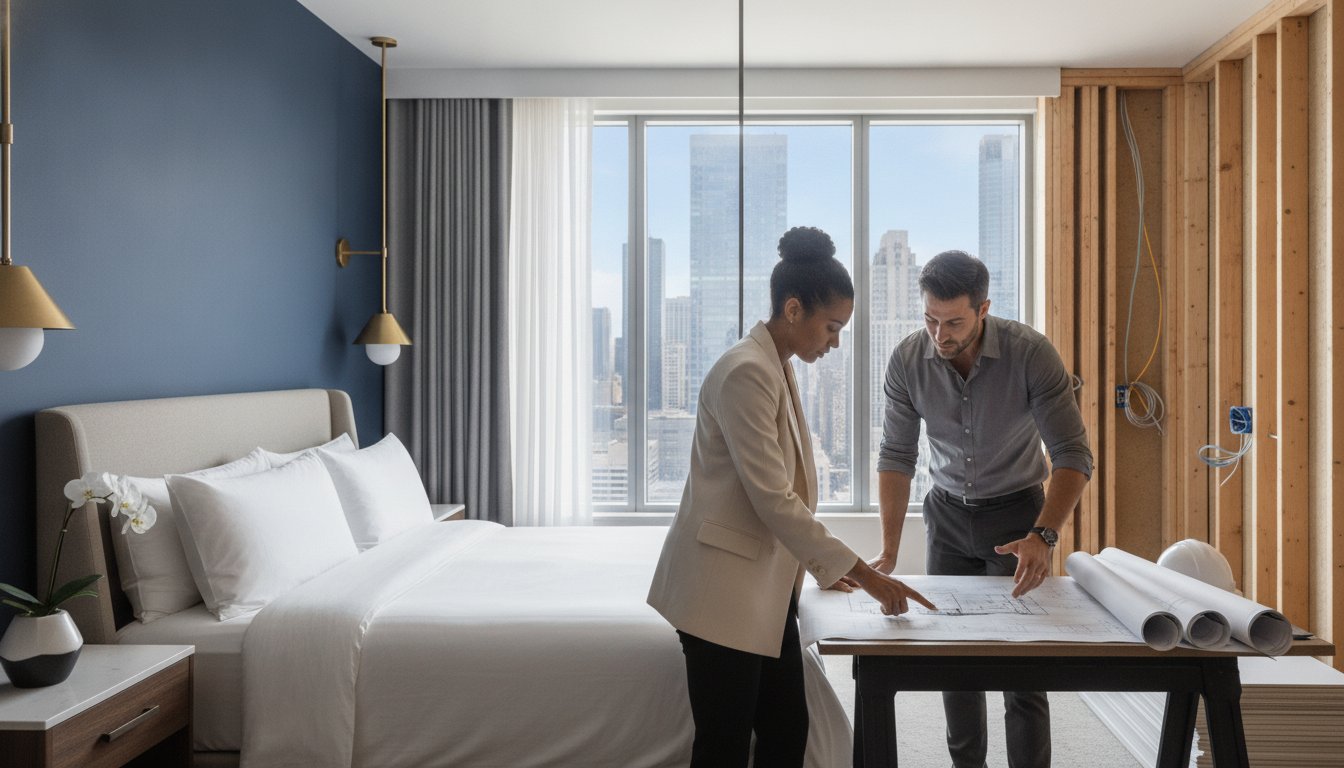

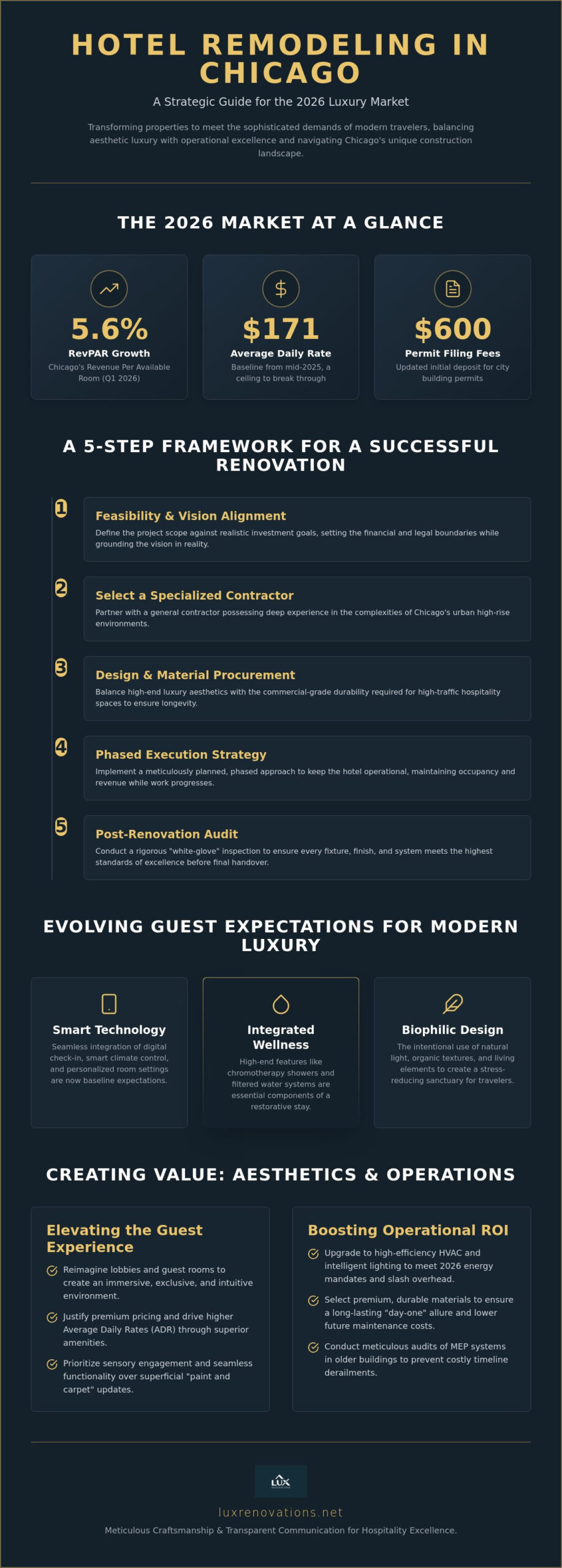
With Chicago’s Revenue Per Available Room (RevPAR) climbing by 5.6 percent in the first quarter of 2026, the margin for excellence in the hospitality sector has never been slimmer. You understand that a premier property must do more than simply exist; it must evolve to meet the sophisticated demands of a modern traveler. However, the prospect of a major hotel remodeling project often brings a familiar set of anxieties. Between navigating the city’s updated $600 permit filing fees and managing the logistics of high-rise construction without alienating current guests, the path to a higher Average Daily Rate is fraught with complexity.
We recognize that your property is both an asset and a legacy. This guide provides a strategic roadmap to help you orchestrate a renovation that balances aesthetic luxury with the technical rigors of 2026 energy and safety standards. You’ll discover how to maintain seamless project execution in a high-stakes urban environment and transform your vision into a measurable increase in property value. We will examine everything from smart technology integration to the nuances of Chicago’s evolving labor costs, ensuring your transformation is as disciplined as it is beautiful.
Key Takeaways
- Learn why integrating smart room technology and sustainable systems is essential for staying competitive in the 2026 Chicago luxury market.
- Discover a disciplined five-step framework for hotel remodeling that ensures your vision aligns with technical feasibility and budgetary goals.
- Identify how reimagining lobbies and guest rooms can drive higher Average Daily Rates while creating a lasting sanctuary for your clientele.
- Master the complexities of urban logistics, including high-rise elevator schedules and the latest Chicago building and fire safety codes.
- Understand the value of a sophisticated partnership that prioritizes meticulous craftsmanship and transparent communication throughout the property transformation.
The Strategic Necessity of Hotel Remodeling in the 2026 Market
In the current hospitality climate, the concept of a renovation has shifted from a cosmetic refresh to a fundamental recalibration of the entire property. Successful hotel remodeling today demands an integrated approach that addresses both the visible guest experience and the invisible back-of-house systems. With Chicago’s Revenue Per Available Room (RevPAR) increasing by 5.6 percent in the first quarter of 2026, the competition for the discerning traveler is intense. Owners can’t rely on superficial updates. They must instead invest in comprehensive transformations that align with the principles of modern Hotel design to secure long-term relevance.
The “Experience Economy” has matured. Guests aren’t just looking for a room; they’re seeking an immersive environment that feels both exclusive and intuitive. This shift means moving beyond the “paint and carpet” approach toward a design philosophy that prioritizes sensory engagement and seamless functionality. When done correctly, this strategic modernization directly impacts the bottom line. Data from mid-2025 showed an Average Daily Rate (ADR) of $171 in Chicago. A sophisticated remodel allows a property to break through that ceiling, justifying premium pricing through superior amenities and operational excellence.
Evolving Guest Expectations for Luxury and Tech
Modern luxury is increasingly defined by how well a space anticipates a guest’s needs. High-end bathroom remodeling now incorporates integrated wellness features like chromotherapy showers and filtered water systems. These aren’t just upgrades; they’re essential components of a restorative stay. Digital check-in and smart climate control systems have become baseline expectations, allowing guests to curate their environment before they even step through the door. Additionally, biophilic hospitality design is now a 2026 standard, defined as the intentional marriage of natural light, organic textures, and living elements to create a sanctuary that reduces traveler stress and promotes well-being. The same wellness-centric precision driving luxury home remodeling in 2026 is now reshaping how hotel interiors are conceived, with AI-driven climate controls and dedicated wellness spaces becoming defining features of elite properties.
Operational Efficiency and Long-Term Value
While the aesthetic transformation captures the headlines, the true ROI often lies in the infrastructure. Chicago’s 2026 energy mandates require a proactive approach to sustainability. Upgrading to high-efficiency HVAC systems and intelligent lighting doesn’t just reduce carbon footprints; it significantly slashes monthly overhead. Choosing premium materials during the construction phase is a calculated decision in longevity. Meticulous craftsmanship and durable finishes ensure the property maintains its “day-one” allure for years, drastically lowering the frequency and cost of future maintenance cycles. This disciplined approach to hotel remodeling ensures that the property remains an elite competitor in the Chicago market for the next decade.
How to Plan a Successful Hotel Renovation: A 5-Step Framework
Executing a premier hospitality transformation in Chicago requires more than a visionary eye. It demands a structured, five-step framework designed to navigate the specific regulatory and logistical challenges of 2026. Precision is mandatory. The process begins with Feasibility and Vision Alignment, where we define the project scope against realistic investment goals. For instance, the City of Chicago now requires a $600 initial deposit for plan-based building permits. This initial phase sets the financial and legal boundaries for the entire hotel remodeling journey, ensuring the vision remains grounded in reality.
The second step involves selecting a specialized hospitality general contractor who possesses deep experience in urban high-rise environments. Following this, we move into Design and Material Procurement. Here, the focus remains on balancing high-end luxury with the commercial durability required for high-traffic environments. The fourth step is a Phased Execution Strategy. This is vital for maintaining occupancy and revenue while work progresses in isolated wings of the building. Finally, we conclude with a Post-Renovation Audit. This rigorous inspection ensures that every fixture, finish, and system meets a “white-glove” standard of excellence.
The Pre-Construction Phase: Setting the Foundation
Before a single wall is opened, we conduct a meticulous audit of the mechanical, electrical, and plumbing (MEP) systems. Older Chicago infrastructure often hides technical challenges that can derail a timeline if not identified early. We also build our schedules around the city’s seasonal construction cycles. This ensures that heavy logistics or exterior work isn’t hampered by severe winter weather. For properties with sophisticated dining programs, integrating a specialized restaurant renovation contractor is essential. This ensures your F&B spaces comply with the July 2026 tipped wage increases while maintaining a cohesive aesthetic across the entire property.
Selecting Your Construction Partner
High-rise environments present unique hurdles that suburban contractors are often unequipped to handle. From managing strict loading dock schedules to implementing elevator protection protocols, your commercial general contractor must possess a proven track record in the downtown core. This expertise is what allows for strategic hotel remodeling that respects the guest experience. A partner who understands “quiet hours” and site cleanliness can perform a major transformation without generating negative guest reviews. If you’re ready to explore how a disciplined approach can elevate your property, consider a partner who views remodeling as a craft rather than just a commodity.
Priority Areas for Modern Hotel Remodeling Services
Strategic hotel remodeling prioritizes the spaces where guests spend their most intimate moments and their most social hours. In a competitive urban market, not every square foot offers the same return on investment. We focus on high-impact zones that directly influence guest satisfaction scores and property valuation. The lobby, once a mere transition point for check-ins, has evolved into a “third place.” It’s a fluid environment where guests work, socialize, and dine throughout the day. Creating this versatility requires a sophisticated understanding of spatial flow and acoustic management. Open-concept designs are visually stunning, but they fail if the noise from the bar disrupts a guest trying to finish a presentation in the lounge.
The modern guest room must now function as a high-tech sanctuary. Space maximization is the primary goal, especially in Chicago’s historic high-rise footprints where square footage is at a premium. Digital connectivity is no longer a perk; it’s a baseline requirement. This includes integrated smart TVs, mobile-controlled lighting, and reliable high-speed hubs that support multiple devices. While these tech upgrades are vital, the back-of-house systems shouldn’t be ignored. Sustainable upgrades to concealed infrastructure, such as water filtration and smart HVAC sensors, drive significant long-term savings while aligning with the “mindful indulgence” trend of 2026.
The Transformation of the Guest Bathroom
The guest bathroom remains the most critical area for perceived value. We’re seeing a definitive shift away from traditional tubs in favor of spa-like walk-in showers featuring premium stone finishes and rain-head fixtures. These elements create a sense of permanence and luxury that guests remember. Smart mirrors with integrated lighting and high-efficiency, low-flow fixtures have become the standard for elite properties. For those planning an upgrade, reviewing a bathroom remodel cost Chicago guide can provide essential insights into the investment required for high-end materials and meticulous craftsmanship in a commercial setting.
Reimagining F&B and Social Hubs
Food and beverage areas are being redesigned to accommodate the 2026 shift toward “mindful indulgence,” which includes elevated bar menus and sophisticated non-alcoholic cocktail programs. Bars and lounges must now transition seamlessly from morning coffee hubs to evening social centers. This versatility is achieved through adjustable lighting, modular furniture, and integrated retail components. By incorporating local art and curated retail displays into the hospitality experience, hotels can create an authentic Chicago atmosphere that appeals to both travelers and locals. Properties that also operate branded retail spaces within their footprint will find that partnering with specialists in retail construction services ensures those commercial environments communicate brand identity with the same precision as the guest-facing spaces. This integrated approach ensures that your hotel remodeling project results in a property that’s as operationally efficient as it is aesthetically compelling.
Navigating Chicago’s Unique Hospitality Construction Logistics
The success of a hotel remodeling project in Chicago often depends less on the final paint color and more on the invisible mastery of urban logistics. Executing a transformation in a high-rise environment requires a level of precision that mirrors a surgical operation. In dense neighborhoods like the Loop or River North, every delivery must be timed to the minute. We manage strict loading dock schedules and implement comprehensive elevator protection protocols to ensure that construction activity never compromises the building’s primary functions. This disciplined approach prevents the common bottlenecks that lead to budget overruns and delayed openings.
Beyond the city center, our expertise extends to the luxury markets of the North Shore. Municipalities such as Glencoe, Winnetka, and Evanston maintain their own distinct building codes and aesthetic standards. Navigating these local requirements demands a partner who understands the nuance of each jurisdiction. We also prioritize a “Good Neighbor” policy. This means using advanced dust mitigation systems and scheduling high-decibel work during windows that minimize the impact on surrounding urban residents. Maintaining a clean, quiet, and professional site is essential for protecting your property’s reputation during the transition.
Urban High-Rise Challenges
Working vertically presents unique mechanical constraints. We frequently encounter older Chicago buildings where plumbing and electrical systems require delicate, non-invasive upgrades to meet modern demands. By applying the same rigorous logistical frameworks found in high-end condo remodeling, we ensure that material movement is seamless and non-disruptive. Coordinating specialized trades within the tight footprints of River North or the Gold Coast requires constant communication and a steady hand. This ensures that the renovation moves forward with momentum while respecting the structural integrity of the historic architecture.
Local Permitting and Compliance
Adhering to the Chicago Department of Buildings (DOB) permit process is a complex undertaking that requires professional oversight. In 2026, compliance with local fire safety regulations and new energy mandates is more stringent than ever. We utilize professional expeditors to navigate the administrative landscape, accelerating the timeline from filing to the first day of construction. Our team ensures that ADA compliance is woven naturally into the luxury design, creating an accessible environment that doesn’t sacrifice aesthetic excellence. If you’re preparing for a complex urban transformation, we invite you to consult with a premier general contractor who understands the intricacies of the Chicago market.
The Lux Renovations LLC Approach to Hospitality Excellence
At Lux Renovations LLC, we view hotel remodeling as a disciplined orchestration of craft and commerce. Our “white-glove” commitment ensures that every phase of the project is managed with the same level of attention given to the final aesthetic finishes. We act as a visionary partner, guiding property owners through the labyrinth of Chicago’s 2026 regulatory updates and high-rise logistical hurdles with a steady, authoritative hand. This approach transforms a potentially disruptive construction phase into a controlled, professional evolution of your property. By balancing high-end sophistication with grounded reliability, we provide the peace of mind that comes from knowing your investment is in expert hands.
Transparency and communication are the pillars of our process. We understand that hospitality projects involve a complex web of stakeholders, from ownership groups to on-site management teams. Our methodical flow of communication ensures that every party is aligned on the project’s progress and quality standards. Whether we are working in the dense urban core of the Loop or the luxury markets of the North Shore, our goal is to position your property for a successful 2026 and beyond. We don’t just build spaces; we realize the potential of your property through meticulous craftsmanship and disciplined project management.
Why Experience Matters in Chicago Hospitality
Navigating the complexities of an urban renovation requires more than general knowledge; it requires the specialized skill of a veteran chicago commercial contractor. Our background in high-rise environments allows us to manage multi-disciplinary teams with surgical precision, ensuring that plumbing, electrical, and structural trades work in perfect harmony. We understand that in the hospitality sector, time is a literal currency. We focus on delivering projects within the specified budget and on a timeline that respects your revenue cycles. Our expertise includes:
- Surgical management of complex urban site logistics and loading dock schedules.
- Deep technical mastery of Chicago’s 2026 energy and fire safety codes.
- A proven track record of delivering elite finishes in high-pressure environments.
Your Partner in Transformation
A successful hotel remodeling project must protect the guest experience even while the work is underway. We specialize in phased execution strategies that minimize operational downtime, allowing your property to remain a sanctuary for guests during its transformation. Our dedication to maintaining the aesthetic integrity of your brand is absolute. We ensure that every material choice and structural change reinforces the narrative of luxury you’ve built. This commitment to excellence ensures that the final physical result is as durable as it is beautiful. Contact Lux Renovations LLC for a sophisticated consultation on your hotel project.
Elevating Your Hospitality Standard for 2026
Reimagining a luxury property is a profound undertaking that demands a rare balance of aesthetic vision and technical discipline. Throughout this guide, we’ve explored how hotel remodeling serves as a strategic recalibration to meet evolving guest expectations and 2026 energy mandates. Success in the Chicago market requires more than a design refresh; it necessitates a partner who can master the vertical logistics of the Loop and the specific municipal requirements of the North Shore luxury markets. Every decision, from smart technology integration to acoustic management in social hubs, contributes to a property that is both operationally efficient and emotionally resonant.
Lux Renovations LLC brings specialized high-rise and luxury commercial expertise to every transformation. Our team provides comprehensive project management from the initial planning stages to the final, meticulous walkthrough. We invite you to Partner with Chicago’s Premier Hospitality Contractor to ensure your renovation is executed with surgical precision and unyielding quality. Your property is a significant asset. It deserves a partner who values integrity and peace of mind as much as the final physical result. Let’s build a legacy that defines the future of Chicago hospitality.
Frequently Asked Questions
How much does hotel remodeling typically cost per key in Chicago?
Investment levels for hotel remodeling are generally categorized by property tier, ranging from essential updates in economy hotels to comprehensive structural changes in luxury properties. In a major union market like Chicago, labor costs can account for 25 to 40 percent of the total project expenditure. We recommend establishing a budget that reflects your desired market position and target Revenue Per Available Room (RevPAR) goals. This ensures the financial scope aligns with the expected return on investment.
How can we keep the hotel open during a major renovation?
You can maintain operations by implementing a strategic phased execution plan that isolates specific floors or wings of the building. This methodical approach minimizes the physical and auditory impact on guests while allowing revenue to continue flowing through the remaining rooms. By working during lower occupancy windows and strictly adhering to “quiet hours,” we ensure the guest experience remains undisrupted. Disciplined site management is the key to balancing construction momentum with hospitality standards.
What are the most important technology upgrades for hotels in 2026?
Essential technology for 2026 focuses on integrated smart room controls, mobile check-in capabilities, and robust digital connectivity. Guests now expect to manage lighting, entertainment, and climate via their own devices seamlessly. Additionally, properties are integrating AI-driven systems to enhance search visibility and personalize the stay experience. These upgrades are no longer considered luxury additions; they’re foundational requirements for any property aiming to compete in the modern Chicago market.
Do we need a specialized hospitality general contractor or a standard commercial one?
A specialized hospitality general contractor is vital for navigating the unique logistical and regulatory hurdles of a hotel project. Unlike standard commercial firms, hospitality experts understand the nuances of guest-first site management and complex high-rise logistics. They possess the disciplined technical skill to manage multi-disciplinary teams while respecting the aesthetic integrity of a luxury brand. This specialized expertise is particularly critical for maintaining a “white-glove” environment in a dense urban core.
How long does a typical guest room renovation take?
The duration of a guest room renovation depends heavily on the depth of the project scope. While a cosmetic refresh moves quickly, a comprehensive hotel remodeling that includes bathroom reconfiguration and technical infrastructure upgrades requires a more deliberate timeline. We focus on creating a predictable rhythm that allows for high-quality execution without unnecessary delays. Precise planning during the pre-construction phase ensures the project maintains momentum from the first room to the final walkthrough.
What Chicago building codes specifically impact hotel remodeling?
Chicago’s 2026 building codes place significant emphasis on energy efficiency and rigorous fire safety standards. Properties must successfully pass inspections from the Department of Buildings’ Special Inspection Program and the Electrical Bureau before a license is issued. Additionally, hotels are subject to semi-annual inspections to ensure ongoing compliance with the Chicago Municipal Code. Understanding these local mandates is critical for ensuring your project moves forward without administrative bottlenecks or unexpected penalties.
How can we implement sustainable features during a remodel to reduce operating costs?
Sustainability is best achieved through high-efficiency HVAC systems, intelligent lighting controls, and premium low-flow plumbing fixtures. These upgrades significantly reduce monthly overhead while appealing to the modern traveler’s preference for eco-conscious lodging. By future-proofing your property against evolving energy mandates, you secure long-term value and operational stability. Meticulous craftsmanship ensures these concealed systems function at peak efficiency, providing a quiet and reliable environment for your clientele. The same principles that define elite luxury home remodeling standards in 2026 — invisible intelligence, wellness-centric design, and durable premium materials — translate directly into the most effective sustainable strategies for hospitality properties.
What is the best way to manage noise complaints during a hotel renovation?
Managing noise requires a proactive “Good Neighbor” policy and strict adherence to designated work windows. We schedule high-decibel activities during mid-day hours when the majority of guests are out of the building. Advanced dust mitigation and elevator protection also play a role in maintaining a clean, professional atmosphere. Clear communication with guests regarding the property’s transformation can turn a potential inconvenience into a narrative of improvement and future luxury.